Alcove shelving is one of the most attractive and practical shelving solutions for displaying books, ornaments and personal items in your home.
Many people assume measuring an alcove is straightforward and then find that older properties often feature floors that slope, uneven walls and chimney breasts that aren’t perfectly symmetrical. Taking the time to measure correctly can save considerable time and money – not to mention the frustration later on.
Discover how to accurately measure an alcove for shelving. Follow our expert guide to achieve perfectly fitted shelving in any room.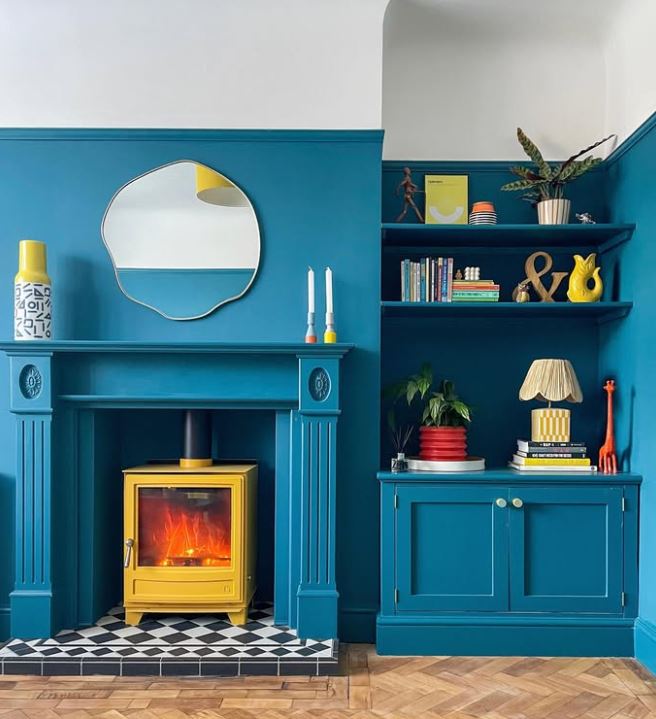
Why Accurate Alcove Measurements Matter
Unlike freestanding shelving, alcove shelving is designed to fit within a specific space. Even a few millimetres can make the difference between a perfect fit and a frustrating time.
Accurate measurements help ensure that:
- Shelves fit neatly between walls
- Shelving sits level
- Gaps are minimised
- Shelving is ordered correctly
- Installation runs smoothly
This is particularly important when designing bespoke alcove shelving or made-to-measure furniture.
Tools You’ll Need
Before you begin, gather a few basic tools:
- Tape measure
- Pencil and notepad
- Spirit level
- Step ladder (if measuring high alcoves)
- Smartphone or camera (optional for reference photos)
Taking clear notes and photographs can be extremely useful when discussing your design.
Step 1: Measure the Width of the Alcove
The first measurement you’ll need is the width.
Measure the distance between the two side walls at three separate points:
- Near the floor
- Half way up
- Near the top
Many homes, particularly Victorian and Edwardian properties, have walls that aren’t perfectly straight. Measuring at multiple points helps to identify any variations.
Record all three measurements and note the smallest width. This is often the most important figure when planning fitted shelving.
For example:
- Bottom width: 1015mm
- Middle width: 1010mm
- Top width: 1005mm
In this example, the alcove is slightly narrower towards the top.
Step 2: Measure the Height
Next, measure the height of the alcove.
Take measurements from the floor to the ceiling at both the left-hand and right-hand sides of the alcove. If you’re installing shelving above a skirting board, fireplace, or existing cabinet, measure from the relevant position instead.
Again, don’t assume the floor or ceiling is perfectly level.
Note each measurement and record any significant differences.
Step 3: Measure the Depth
Depth is often overlooked, but it’s important to check when designing alcove shelving.
Measure from the front edge of the alcove (or relevant position) back to the rear wall at several points.
This measurement will help determine:
- Shelf depth
- How the shelving will sit in relation to surrounding features
Most alcoves vary in depth, so multiple measurements are recommended.
Step 4: Check for Obstacles
Every alcove is different and many contain features that need to be thought about during the design process.
Look for:
- Skirting boards
- Picture rails
- Dado rails
- Plug sockets
- Light switches
- Radiators
- Pipework
- TV aerial points
- Internet connections
Measure and record the position of any obstacles, including their height, width, and distance from nearby walls.
These details can have a significant effect on the final shelving design.
Step 5: Measure Around the Chimney Breast
If you’re installing shelving on both sides of a fireplace, do measure both alcoves independently.
Many people assume the alcoves on either side of a chimney breast are identical. In reality, slight variations are common, particularly in older houses.
Measure each alcove separately and compare the dimensions. Even small differences can affect how fitted shelving is designed and later fitted.
Step 6: Check Wall Straightness
Very few walls are perfectly straight, especially in period properties.
Use a spirit level to check:
- Vertical wall alignment
- Floor level
- Ceiling level
If walls bow inward or outward, this should be noted when planning bespoke shelving.
Professional furniture makers often build in allowances to accommodate these irregularities, ensuring a clean and seamless fit. This involves insetting the side panels and widening the uprights that fit into the walls.
Creating a Simple Alcove Sketch
Once you’ve gathered your measurements, create a basic sketch of the alcove.
You will need to include:
- Width measurements
- Height measurements
- Depth measurements
- Locations of sockets and switches
- Skirting board dimensions
- Architectural features
This visual reference can be extremely helpful during the design process.
Common Alcove Measuring Mistakes
Measuring Only Once
Always double-check measurements. A second set of measurements can often reveal small errors that might otherwise go unnoticed.
Assuming Walls Are Straight
Many alcoves appear square but are actually slightly tapered. Taking measurements at multiple positions helps to identify these variations.
Ignoring Skirting Boards
Skirting boards can affect how shelving or cabinets fit against the wall. Be sure to account for their depth and height.
Forgetting Future Requirements
Think about how the shelving will be used.
Will you be storing books, decorative items or electronics? The intended use can influence shelf depth, spacing and the overall design.
Measuring One Alcove and Assuming the Other Matches
This is a particularly common mistake around chimney breasts. Always measure each side separately.
When to Choose Made-to-Measure Alcove Shelving
If your alcove has uneven walls, unusual dimensions or architectural features, made-to-measure shelving is often the best solution.
Unlike standard shelving units, bespoke alcove shelving is designed around the exact dimensions of the space. This allows people to maximise storage while achieving a fitted, professional and attractive appearance.
Here is a before and after of how one of our customers transformed his space with our Made to measure Alcove shelving
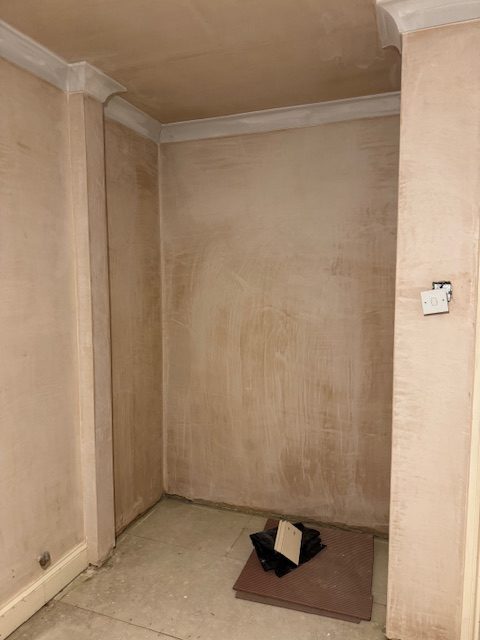
A before image of our customers space before installing his made to measure alcove shelving
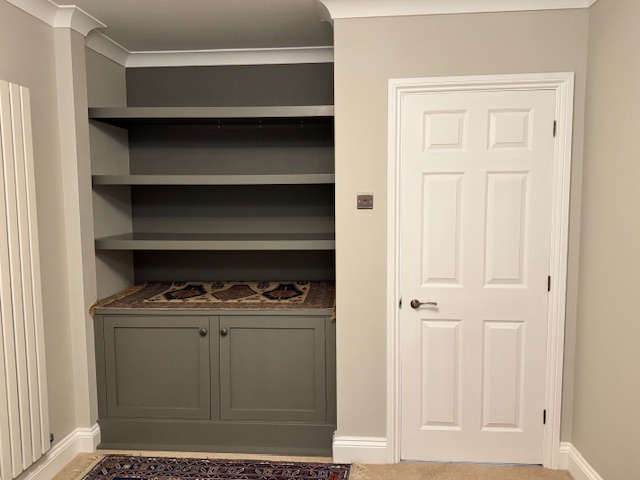
After installing our made to measure alcove shelving and cupboard, Transforming his space.
Final Thoughts
Measuring an alcove for shelving isn’t difficult but accuracy is crucial. By taking careful measurements of the width, height, depth and surrounding features, you’re on your way to a wonderfully successful shelving project.
Whether you’re planning simple floating shelves or a fully fitted alcove storage solution, investing a little extra time in the measuring stage can help ensure a perfect fit and a beautiful finished result. For people seeking a seamless look and maximum use of space, bespoke alcove shelving remains one of the most effective ways to transform an underused area into a practical and attractive feature. Remember if you need any assistance with your design you can always get in touch with one of our expert designers. We can even create a base design for you and support is available every step of the way